2048 Puzzle Fun
Gimica GmbHCasual
4.5306.00 Reviews
- Version
- 1.10.0
- Installs
- 1.00M
- Age Rating
- Everyone
Screenshots
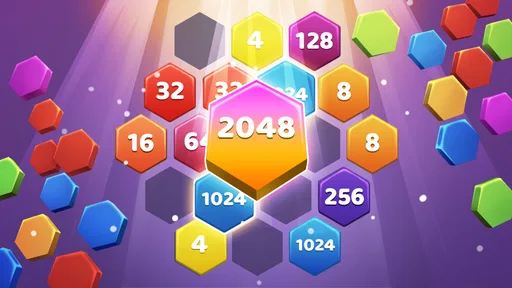
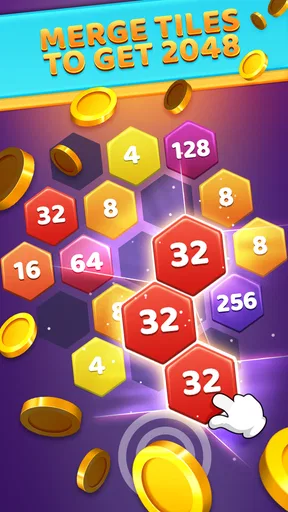
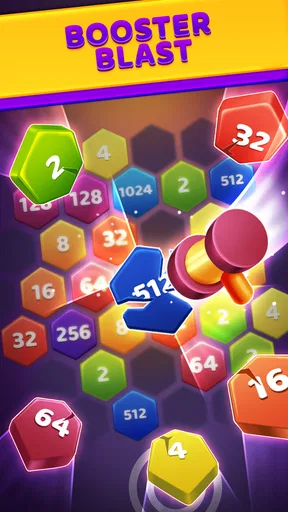
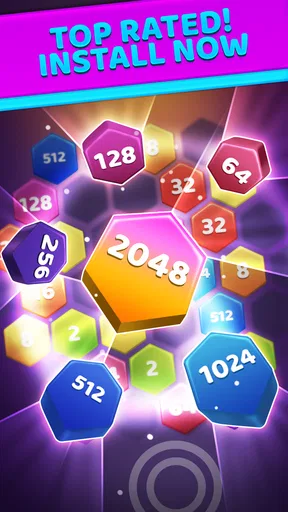
Our Review of 2048 Puzzle Fun
 Analysis by Appyee
I downloaded 2048 Puzzle Fun expecting a familiar number-merging game, and that is exactly where it starts: a simple casual puzzle built around combining matching tiles until the board becomes difficult to control. The appeal is immediate because the rules are easy to understand, the turns are quick, and I can play without setting aside a large block of time. The “twist” suggested by its store positioning is best understood as a light variation on the classic formula rather than a completely different genre experience.
That distinction matters. This is not a story-driven game, a competitive multiplayer title, or a deep strategy simulator. It is a compact brain teaser for spare moments, and its success depends on how well that familiar loop stays pleasant after the first burst of curiosity disappears. In my experience, the game is strongest when I want a quiet distraction with a little more thought than an endless tapper, but it is less convincing for anyone looking for constant new content or a substantial progression system.
How 2048 Puzzle Fun Holds Up Beyond the First Session
I find the longer-term appeal comes down to whether I enjoy turning small mistakes into better decisions, rather than waiting for the game to introduce a new kind of challenge. In the next section, I look at how a modest personal routine—such as choosing one board habit to improve—can keep each return purposeful without making a casual puzzle feel like homework.
The first week feels welcoming because the rules are so clear
The first few sessions are easy to enter. I do not need a tutorial-heavy introduction or a long explanation before making useful moves. The board communicates the central idea naturally: matching values combine, empty spaces matter, and every move changes the shape of the next problem. That low barrier makes it suitable for a quick break, a commute, or a few minutes before bed.
What I enjoy most during the first week is the balance between control and uncertainty. I choose the direction of each move, but I cannot simply plan the entire board in advance because new tiles alter the available space. That creates a small but satisfying mental rhythm: scan the board, protect the useful corner, avoid filling the open lanes, and think about what the next move might take away.
The game works particularly well for people who enjoy familiar rules with a little pressure. A beginner can make progress by reacting to the visible board, while a more experienced player quickly starts thinking about tile order, empty cells, and keeping larger values organized. It is a gentle introduction to spatial planning, although it should not be mistaken for a full logic-training program.
I also find the short-session format practical. There is no need to prepare, gather other players, or remember a complicated objective. If I have only a few minutes, I can still complete a meaningful run. If I have longer, I can continue until the board becomes crowded. That flexibility is one reason the game has reached more than a million installs and maintains an average rating of 4.5 from roughly 1.6 thousand ratings.
The familiar formula is the main strength and the main risk
Because the core idea is recognizable, the game earns trust quickly. Players who already know the traditional 2048 style will understand the basic challenge almost immediately. That makes 2048 Puzzle Fun approachable, but it also means the app has to work harder to remain interesting. A familiar puzzle can feel comfortable for a long time, yet comfort can turn into repetition when there is no meaningful reason to return.
During early play, I would recommend resisting the temptation to swipe quickly. The best improvement is not faster movement but better board discipline. I try to keep the highest-value tile anchored in one corner and avoid making moves that scatter the larger tiles across the board. This is a small habit, but it changes the experience from random swiping into deliberate planning.
Another useful first-week approach is to treat empty spaces as a resource rather than as decoration. A move that creates a combination may still be poor if it removes the last safe cell. I often pause before a tempting merge and ask whether it leaves at least one practical route for the next few turns. That simple check prevents many avoidable dead ends and gives the game more strategic texture than its casual label might suggest.
For a realistic everyday example, I can imagine opening it while waiting for a coffee or sitting in a reception area. I can play one short attempt, stop without losing a story thread, and return later when I have another spare moment. That makes it more convenient than a game that demands continuous attention. The trade-off is that the same convenience can make it easy to play mechanically, especially when I am tired and keep repeating familiar moves without really thinking.
What changes after the novelty has worn off
After the initial week, the important question is no longer whether the game is understandable. It is whether the basic puzzle still gives me a reason to open it tomorrow. For me, the answer depends on my relationship with score-chasing. If I enjoy refining decisions and trying to beat my previous performance, the board can remain rewarding. Each attempt becomes a small experiment in patience, positioning, and risk management.
If I need frequent surprises, however, the appeal fades more quickly. A standard board-based number puzzle does not automatically provide the variety of a level-based match game, a word game with changing prompts, or a daily puzzle with a fresh shared challenge. The experience is driven mainly by my own improvement, not by a steady stream of new situations supplied by the game.
This makes the title a good fit for a particular kind of recurring habit. I can use it as a mental warm-up, a way to occupy idle time, or a low-pressure alternative to scrolling. I would not choose it as my only casual game if I wanted events, social interaction, collectible goals, or a strong sense of progression. Its long-term value comes from replaying the same underlying challenge with better judgment.
Month-to-month value depends on self-imposed goals
Over a longer period, I think of 2048 Puzzle Fun less as a content-rich game and more as a reusable puzzle tool. The board does not need a large cast of characters or an elaborate setting to be useful, but it does need to keep my attention. That happens when I give each session a purpose: improve my opening pattern, avoid a particular mistake, or see whether I can maintain a safer corner strategy for longer.
One practical method is to review the final few moves whenever a run ends. Instead of immediately starting again, I look at what caused the collapse. Did I fill the row that I was relying on? Did I move the largest tile away from its protected position? Did I choose a short-term merge that left no future options? This turns failure into feedback and helps the game feel less like luck.
I also find value in alternating focused sessions with relaxed ones. In a focused run, I plan several moves ahead and accept that progress may be slow. In a relaxed run, I simply play for a few minutes without worrying about the result. That prevents the puzzle from becoming a constant test of performance. It also reveals whether I genuinely enjoy the mechanics or only enjoy the satisfaction of a high score.
For people who like routine, the game can fit nicely into a daily habit. A short session during a lunch break may be enough to reset attention without creating the commitment associated with a larger game. For people who need external motivation, the month-to-month experience may feel thin. Without a personal target, a new challenge structure, or another reason to return, repeated boards can begin to feel interchangeable.
The developer, Gimica GmbH, presents this as a free casual game, and that positioning is accurate in the sense that the basic appeal is easy to access. I can try it without paying, which makes experimentation straightforward. Free access is especially useful here because the game’s suitability is personal: some players will happily return to the loop, while others will know after a handful of sessions that they want more variety.
Maintenance is light, but attention still needs managing
From a player’s point of view, the maintenance burden is low. I do not have to learn a large system, organize a collection, or keep track of a complicated account routine. The current version is 1.7.0, and the game supports devices running Android 7.0 or later. That gives it a broad place among older and newer Android phones, although actual comfort will naturally depend on the device and the way its controls feel in hand.
The real maintenance task is mental rather than technical. If I play without a plan, the game can become a repetitive reflex: swipe, merge, swipe, lose, restart. To keep it worthwhile, I need to vary my focus and notice the decisions that lead to failure. This is not demanding maintenance, but it is the difference between using the app as a thoughtful puzzle and using it as background tapping.
I would also avoid treating every session as a competition. The structure encourages another attempt immediately after a loss, and that can be enjoyable, but it can also create a loop where I continue only because the previous run ended badly. Setting a natural stopping point helps. For example, I might stop after one considered attempt rather than restarting until I am frustrated. That keeps the game in the role of a break instead of allowing it to consume the break.
Its Everyone content rating makes the game broadly approachable for families and younger players. Still, suitability is not the same as universal interest. A child who enjoys visual rewards and fast changes may prefer a more animated casual title, while an adult who wants a quiet logic exercise may appreciate the restrained structure. The age rating tells me the intended accessibility, but the replay value still depends on personal taste.
Where fatigue starts to appear
The first source of fatigue is repetition. Once I understand the strongest general strategy, many attempts begin with similar decisions. That is not necessarily a flaw in a puzzle game; repetition is part of mastering it. The issue appears when I want the game to surprise me rather than ask me to execute the same discipline more consistently.
The second source is the emotional pattern of near-success. Getting close to a personal best can be motivating, but repeated late-board failures can also feel discouraging. Because the board becomes less forgiving as space disappears, one careless move may undo several minutes of careful planning. Players who dislike restarting after a mistake may find the loop harsher than the friendly presentation suggests.
A third issue is that the casual format can blur the boundary between a meaningful session and idle habit. I might open the game with the intention of playing briefly, then continue simply because the next move is available. That is not unique to this title, but the short, repeatable structure makes it particularly easy to lose track of why I started playing. I recommend using it deliberately if screen-time control matters to you.
There is also a trade-off between simplicity and depth. The rules are clean enough for almost anyone to understand, but players searching for layered objectives may eventually feel that the board is doing all the work. A stronger alternative for that audience would be a casual puzzle with handcrafted levels, changing goals, or a campaign that introduces new mechanics. Those games offer more directed variety, while 2048 Puzzle Fun offers a more open-ended test of personal decision-making.
Who should install it, and who should pass
I would recommend it to someone who already enjoys number puzzles, wants a free way to fill short gaps in the day, or prefers games that can be paused mentally without losing a narrative. It is also a good choice for players who like improving through repetition. The satisfaction comes from recognizing patterns, protecting space, and making fewer careless decisions over time.
I would be more cautious about recommending it to someone who needs a strong reward structure. If your ideal casual game includes new stages, characters, social competition, changing missions, or a steady stream of visual novelty, this may not hold your attention for long. The same applies if you dislike losing progress after one poor move. A level-based puzzle may feel more forgiving because it lets you retry a specific challenge instead of rebuilding a run from the beginning.
It is worth remembering that the game is free, but free access does not make every player a good match. The sensible approach is to try it during the type of spare moment when you expect to use it. If you enjoy the first several sessions without needing outside rewards, it has a fair chance of becoming a useful small habit. If you are already looking for reasons to continue before you have formed a strategy, the novelty may not last.
My long-term verdict
The lasting value here comes from mastery, not constant novelty. 2048 Puzzle Fun succeeds as a compact casual number puzzle because it is easy to start, simple to understand, and deep enough to reward more careful play than random swiping. I like that I can fit it into an ordinary day without making room for a long gaming session, and I appreciate that its challenge comes from my choices rather than a complicated rulebook.
At the same time, I would not describe it as an endlessly expanding game. Once the basic pattern becomes familiar, the responsibility for keeping it interesting shifts to me. I need to set personal goals, review mistakes, and stop before the loop turns into automatic repetition. That is a reasonable trade-off for a small free puzzle, but it should be clear before installing.
My recommendation is therefore positive but specific: try it if you want a calm, repeatable brain teaser for short breaks and enjoy improving at a fixed system. Skip it if you need frequent new content or a richer sense of progression. For the right player, 2048 Puzzle Fun can earn a permanent place as a dependable five-minute distraction; for everyone else, its familiar formula may be pleasant for a while but not compelling enough to remain a long-term habit.
Privacy and Permissions
See what permissions an app requests and how it handles your data.
- Photos/Media/Files
- read the contents of your USB storage
- Storage
- read the contents of your USB storage
- Wi-Fi connection information
- view Wi-Fi connections
- Other
- view network connections, full network access, read terms you added to the dictionary, control vibration, prevent device from sleeping, Google Play license check
Verdict
Strengths of 2048 Puzzle Fun
- Simple swipe controls make it easy to start playing immediately.
- Short sessions work well for quick breaks or casual play.
- Smooth animations make tile movements clear and satisfying.
- Increasing tile values provide a strong sense of progression.
- The puzzle encourages planning, pattern recognition, and strategic thinking.
Limitations of 2048 Puzzle Fun
- Later stages can become repetitive once the core strategy is mastered.
- A single poor move may quickly ruin an otherwise promising board.
- The game may feel slow for players who prefer fast-paced challenges.
- Progress can depend heavily on favorable tile spawns.
- Frequent play may become frustrating when boards end unexpectedly.
Other Releases by Gimica GmbH
View All


Similar Picks in This Category
View All
My Talking Angela
Outfit7 Limited4.2

My Talking Tom
Outfit7 Limited4.3

Pou
Zakeh4.2

My Talking Tom 2: Pet Game
Outfit7 Limited4.3

Candy Crush Saga
King4.6

Bridge Race
Supersonic Studios LTD4.1
Frequently Asked Questions
What is 2048 Puzzle Fun and how is it played?
2048 Puzzle Fun is a number-merging puzzle game based on the classic 2048 concept. You slide numbered tiles across a grid, combining matching values to create larger numbers, with the ultimate goal of reaching the 2048 tile. The controls are simple, but planning ahead is essential because every move can fill the board and end the round.
Is 2048 Puzzle Fun free to download and play?
2048 Puzzle Fun can generally be downloaded and played without an upfront purchase, making it accessible to casual players. However, the exact monetization model may depend on the Android or iOS version, and the app may include advertisements, optional purchases, or other promotional elements. It is worth checking the store listing before downloading.
Does 2048 Puzzle Fun require an internet connection?
The core puzzle experience in 2048 Puzzle Fun is typically suitable for offline play, which makes it convenient for travel, commuting, or moments without a stable connection. Some features, such as advertisements, analytics, cloud synchronization, leaderboards, or updates, may require internet access. Availability of offline functionality can vary between versions.
Is 2048 Puzzle Fun suitable for children and beginners?
Yes, 2048 Puzzle Fun is easy to understand and does not require complicated controls, so beginners and younger players can usually start playing quickly. Nevertheless, parents should review the app’s age rating, advertising practices, and privacy information before installation. The game encourages logical thinking, but repeated attempts can become challenging and highly addictive.
What are the main advantages and possible drawbacks of 2048 Puzzle Fun?
The main advantages are its straightforward swipe controls, short game sessions, strategic gameplay, and ability to provide mental stimulation without requiring advanced gaming skills. Its minimalist puzzle format is also easy to revisit. Possible drawbacks include repetitive gameplay, advertisements in free versions, limited variety compared with larger puzzle games, and frustration when the board becomes impossible to manage.
Play our best games!


